If you ask trainers what reduces them down in the Certificate IV in Training and Assessment, they seldom claim the concept. The sticking factor is almost always positioning and evidence. Not due to the fact that the jobs are challenging, yet due to the fact that the logistics take forethought and the evidence policies are strict. The TAE40122 is developed to make you qualified in the lived craft of an instructor and assessor, which suggests you need actual sessions, genuine learners, and real assessment choices backed by genuine evidence.
I have actually trained many candidates through this stage, from experienced workplace coaches stepping into formal training, to new trainers developing confidence in front of a space. The ones who sail via treat positioning like a tiny project. They align the ideal location, the right learners, the best records, and they record proof as they go as opposed to rushing at the end. This write-up distils those techniques right into something you can act on, whether you are completing your cert iv training and assessment with a large RTO or a shop provider.
What "placement" actually implies in the TAE40122
The TAE40122 needs you to intend, deliver, and analyze training to actual students. Some RTOs prepare a host website, others anticipate you to arrange your very own. In any case, a placement is a period where you deliver several sessions to a target group, accumulate comments, improve your shipment, and perform assessment according to a system of proficiency. While substitute atmospheres are occasionally permitted, the greatest portfolios originate from authentic work environment conditions because that is where irregularity lives. People turn up late, the projector blinks out, a student requires a different activity to grasp the material. Managing that variability is the point.
The specifics differ by RTO and device packaging, but an usual pattern appears like three or more successive sessions of intended training, a capstone session where you conduct analysis against a country wide backed system, and a spread of proof that proves you did what you say you did. Your RTO will certainly map your tasks to devices such as:
- TAEDES411 Use nationally acknowledged training items to meet professional training needs TAEDEL411 Facilitate employment training TAEASS412 Examine competence TAEASS413 Take part in analysis validation TAELLN421 Integrate core skills sustain right into training and assessment
The specific units in your training and assessment course might vary, however the rhythms are comparable. You layout, you deliver, you examine, you improve.
The three contexts that form your strategy
Early selections around positioning context can either expand your options or box you in.
Corporate or venture training. Fast paced, concrete end results. Great for accessibility to willing learners and modern devices. The challenge is scheduling time across shifts, and getting permission to document or accumulate office documents.
Community and not-for-profit programs. Student diversity is a toughness. You will run into different language, proficiency and numeracy requirements, and you can create smart activities that make the learning comprehensive. The trade off is resource restraints and the occasional eleventh hour place change.
Registered Training Organisation classes. If your RTO permits you to assist or co-deliver, this can provide sophisticated positioning with the cert iv tae requirements. The risk is being seen as an assistant as opposed to the trainer of document. See to it your duty and evidence civil liberties are explicit.
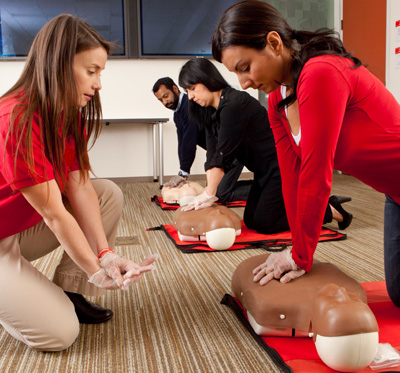
It is appealing to grab the first host site that claims yes. Withstand that. You need a site that lets you be the responsible fitness instructor for at least part of the delivery, provides a coherent team of students, and supports the personal privacy and paper managing your proof will require.
What assessors seek, not simply what forms ask for
When I analyze portfolios, I scan for 4 top qualities before I stress over page count.
Clarity of range. Have you picked a system of expertise and stuck to it, or did you blur 2 or three together? Mixed ranges make your mapping untidy and your assessment choices difficult to defend.
Chain of authenticity. Do the session strategies, presence sheets, photos, slides, and assessment records inform one constant tale with dates and names that line up? If the names transform or days overlap improbably, I need to dig.
Judgment at work. Where did you adapt a task based on student comments or observation, and how did you catch that change? A tidy plan is great. A neat plan that progresses shows genuine practice.
Assessment that fulfills the policies. Legitimate, trusted, adaptable, reasonable. This is not a slogan. I seek directions that are clear, evidence requirements that map to the performance requirements and understanding evidence, and choice making that is consistent with the benchmarks.
You can satisfy these tests without creating a thesis. A well curated, well referenced pack that reveals the story is extra persuasive than a mountain of raw files.
The evidence backbone
Think concerning evidence in layers.
First, there is design evidence. This includes your training requires evaluation, system option, unpacked aspects and performance standards, session plans, mapping, sources, and LLN considerations. The goal here is to reveal you can take a training item and craft a knowing journey that fits actual people.
Second, there is shipment evidence. Sign-in sheets, images of the room design, devices lists, copies of slides or handouts, learner feedback, and your reflective notes on what worked and what did not.
Third, there is assessment evidence. The evaluation strategy, the devices and instruments, the noting overview or standards, finished candidate work with your notes, monitoring lists, questioning documents, and evidence of reasonable change where applicable.
Finally, there is quality control proof. Validation participation documents, improvements you made to devices after responses, and any type of interactions with supervisors regarding analysis decisions.
If you are completing the certificate iv training and assessment while working, your workplace files can do heavy training. A task direction sheet, a security treatment, or a quality checklist can be component of your resource set, provided you reference them and confirm you have consent to include them.
A small checklist of core evidence
- Session plans for at least three distinctive sessions with timing, tasks, products, and assessment touchpoints Attendance records with days and clear names, sustained by photos or space reservations when possible Assessment plan and devices mapped to the unit of expertise, including monitoring and questioning instruments Samples of finished student work with your marking and outcomes taped, plus comments kinds from learners Validation document revealing participation in reviewing assessment devices against the unit requirements
Keep each thing variation controlled and dated. If your RTO utilizes an LMS or e-portfolio system, replicate the structure there. If you utilize cloud storage space, maintain a readme document in each folder that explains what is within and exactly how it maps to units. It conserves your assessor time and reduces the possibility of a not yet sufficient end result because of missing context.
Setting up your positioning without shedding goodwill
You are asking a workplace or area team to offer you time, area, and accessibility to individuals. That is a count on deal as long as it is a management one. Your technique should explain the value to them, the time dedication, privacy plans, and any safety and security impacts.
I when cert 4 training and assessment dealt with a logistics business that accepted a placement on the problem that training happened in between 6 am and 8 am, before peak dispatch. The candidate adjusted her strategy to fit a tight home window and utilized work watching throughout the shift as on the job reinforcement. She collected much better proof in two weeks than other prospects collect in 2 months due to the fact that the host could see immediate benefits.
You likewise require a named contact that can validate your function. Many RTOs need a third party record from a supervisor or office agent. See to it they understand this up front and maintain the type simple. Absolutely nothing sours the relationship like a surprise 2 page record at the end of the placement.
Five sensible steps to protect and structure your placement
Define your system and learners. Pick a system of expertise straightened with the host's work, and determine a student group of a minimum of 3 to 5 people with similar skill objectives. Share the system's simple English intent with the host to verify relevance.
Set dates and mode of shipment. Lock in three to five sessions across two to 4 weeks. Choose what is one-on-one and what can be blended online. Obtain areas and devices reserved in schedule welcomes that include you and your host.
Agree on evidence and personal privacy. Describe what you will accumulate, exactly how you will keep it, and just how you will de identify it if called for. Secure permission kinds early, consisting of authorization for images of training in progress.
Prepare sources and backups. Bring published copies of evaluations, extra pens, and an offline version of your slides. If the projector stops working, have a task that does not need screens.
Confirm manager participation. If a third party record is required, publication 15 minutes after your last session with the manager to finish it while details are fresh.
These actions are simple, however when you formalise them in email, you develop an audit route. Your RTO will certainly thanks for that degree of clarity.
Aligning LLN and practical adjustment with genuine people
TAELLN421 is not a paper workout. It turns up when you have a student that writes well but has problem with numeracy, or a student with great sensible skills who freezes in written examinations. Throughout positioning, display lightly for core abilities. You do not need to run a complete analysis unless your RTO asks for one. A short activity at the beginning of the first session will inform you who requires added scaffolding.
Adjustments need to protect the evidence demands of the device. If the device needs written actions to show underpinning expertise, you can allow dental feedbacks tape-recorded with notes and a records, gave the material remains the very same. If the efficiency proof calls for a job to be done to basic, you can alter the context slightly, not the conventional itself. Record each modification, the reason, and how it still satisfies the rules.
A candidate I mentored dealt with aged care personnel, a number of whom spoke English as a second language. She changed a chunk of theory right into photo supported activities, built word banks on the wall, and permitted short, videotaped verbal response to expertise inquiries. The results were strong, and her proof path explicitly mapped those adjustments to justness and flexibility.
Mapping that serves, not just compliant
Mapping can come to be a box ticking routine. Succeeded, it becomes your layout compass. Beginning with the aspects and performance standards, then identify each planned task and assessment task with the codes they address. You do not require to map every discovering task to every requirement. Prevent over mapping. If a standard needs demo of a procedure end to finish, develop one assessment instrument that captures the whole circulation, then utilize monitoring notes to note the sub actions. Use knowledge concerns to target understanding proof especially, as opposed to hoping a functional job will disclose it.
An excellent mapping table additionally calls out spaces. If you can not discover an area where you have covered required knowledge, put a note to change your session plan. Much better to do that prior to shipment than to reconstruct coverage after the fact.
Getting evaluation right, including the grey areas
The hardest judgment calls generally happen in analysis. The guidelines are basic to state and more subtle in practice.
Validity. Check that each task gauges what the system calls for. If the device asks for planning and afterwards delivering training, an assessment that only requests a composed strategy is not legitimate. Include a practical observation with clear benchmarks.
Reliability. If two fitness instructors noted the same evidence, would certainly they make the very same choice? This is where rubrics and annotated prototypes help. Program what skilled looks like with examples.
Flexibility and justness. Provide pathways for different students as long as outcomes are comparable. Offer affordable timeframes, and be explicit about what assistance is and is not allowed.
Authenticity. Particularly in work environment settings, you need to show that the proof is the candidate's very own work. Signatures, witness declarations, pictures with context, and live observation decrease danger. For on-line entries, brief viva style expertise checks can validate understanding.
There will be side cases. A student finishes a perfect job under guidance however can not respond to basic concerns regarding why they did it in this way. Did they memorize a script, or are they proficient? The much safer decision is not yet competent, with targeted feedback and a possibility to demonstrate understanding. Tape your rationale.
Validation that makes your devices stronger
Validation is not just a meeting to tick a system need like TAEASS413. If you bring your draft devices to a recognition session prior to distribution, you can capture uncertain wording and protection gaps. Two or three specialists who work with the unit on a regular basis will spot concerns in minutes that you might miss out on after hours of writing.
When you record validation, include that went to, their duties, what was examined, the searchings for, and the modifications you made. Maintain old and brand-new variations. The adjustment log shows the high quality loophole at work and functions as specialist growth evidence for your instructor profile.
Managing personal privacy, permission, and IP without drama
Host sites and students want to know that their data is secure. Usage authorization types that clarify clearly what will be caught, how it will be used, and how much time it will be stored. Eliminate last names and recognizing information from examples unless you have specific approval. Where feasible, blur faces in pictures or capture room configurations instead of close ups of people. If you are making use of exclusive procedures or screenshots, get composed clearance and watermark duplicates as "Training sample only".
For storage, use your RTO's system first. If you need to utilize personal cloud storage throughout collection, set folders to personal, and transfer to the RTO platform without delay. Then erase neighborhood duplicates if plan requires it. This might sound fussy, however assessors are progressively rigorous about privacy hygiene, and appropriately so.
When simulated delivery is appropriate
Not every prospect can access an office or area host. Some RTOs run simulated mates for parts of the certificate 4 in training and assessment. Simulation can function when the environment, jobs, and communications are realistic and the evidence still satisfies the system benchmarks. That usually implies a friend of at the very least 3 to 5 participants, practical sources, and situations that match the job context.
The restriction with simulation is spontaneity. You do not get the very same messy adapt and get over minutes that verify assistance ability. If you depend on a substitute environment, reinforce your reflection notes. Explain what would transform in a live work environment and exactly how you would certainly handle it. Stabilize your profile with at least one genuine assessment in the area if your RTO enables it.

Common pitfalls and just how to stay clear of them
The most regular root cause of resubmission is missing out on or weak mapping. Fix this at the beginning by developing your mapping alongside your session strategies and assessment tools. Treat it as style, not admin.
Another typical concern is slim student comments. Common "wonderful session" remarks are nice for the vanity but not for evidence. Ask one timely regarding clearness, one concerning significance, and one regarding speed. Those produce insights you can act upon, and they reveal you seeking and applying feedback.
Candidates additionally journey on third party reports completed by somebody who did not see the delivery. Avoid this by confirming the manager's visibility at essential sessions, or by scheduling them to review recordings where allowed.
Finally, prospects underestimate the time needed for analysis marking and record maintaining. If you run a 90 min evaluation, designate a minimum of the very same quantity of time for noting, responses, and admin. Your future self will thank you.
Building your instructor profile as you collect evidence
While you focus on satisfying the prompt demands of the cert 4 in training and assessment, assume a step in advance. The papers you develop now can create the backbone of your ongoing fitness instructor profile. Keep short reflections on what you found out about facilitation. Note any type of market involvement you performed to keep material present. Maintain certificates from relevant PD. When you later put on deliver as a cert iv trainer assessor, you will have a cool plan showing capability and currency.
If you relocate into contract training or internal L&D, these artefacts show working with managers that you recognize both the conformity and craft sides of the function. That mix is rarer than it must be.
A worked instance from start to finish
A prospect called Luis operated in a hospitality group turning out a brand-new factor of sale procedure. He picked a system concentrated on giving solution and handling deals. He had access to 2 places and 8 team throughout mixed shifts. Here is how he structured it.
He met the venue manager, shared the unit intent, and agreed on 3 sessions over ten days. Session one was a 60 minute introduction in a silent corner prior to opening, using screenshots and a demo terminal. He evaluated LLN by asking staff to comply with a brief, illustrated sequence in sets and noted who needed more exercise with numeracy around discounts.
Session two was on the floor during a time-out, with personnel cycling via a technique scenario. Luis utilized a monitoring checklist that mirrored performance criteria. He caught pictures of the setup and anonymised them for proof. He likewise built in a fast understanding check using 3 verbal concerns each, recording their responses.
Session three was the formal analysis. Team finished a function play with established purchases and a brief written section on mistake handling. 2 personnel required practical modification. Luis enabled oral feedbacks, recorded on his phone with permission, and recorded them later. He marked against a clear rubric and taped outcomes.
Throughout, he collected learner responses with 2 sharp concerns and one open prompt. "What was clearest today?" "What still really feels blurry?" "Tell me one thing I can improve." He applied that comments by adding a laminated fast referral card at bench, which reduced errors the next day. He after that took his devices to a recognition team run by the group's training group. They suggested including a repairing thing for an usual reimbursement situation he had actually missed. He updated the device and documented the change.
His last profile consisted of session strategies, mapping, attendance, pictures, analysis devices and finished examples, a recognition record, and representation notes. The assessor could comply with the story in under 15 mins due to the fact that the structure was tight and each item was classified with date, session number, and unit codes. That degree of order did not occur by crash; it streamed from very early planning.
Making one of the most of RPL and credit rating, sensibly
If you have significant experience, Acknowledgment of Previous Discovering can reduce your course through the certificate certificate 4 training and assessment iv tae. RPL still calls for proof. If you have actually previously provided training, generate session plans, attendance, comments, and evaluations from that time. If you made or verified devices, consist of those with mapping. If you took care of LLN modifications, demonstrate how. Solid RPL entries look a whole lot like solid training and assessment profiles. The distinction is timing, not content.
Do not compel RPL where your evidence is thin. A short, targeted space training session frequently costs less time than weeks of paper hunting. Smart candidates mix RPL for devices where their evidence is abundant, and complete delivery and analysis jobs where they want to sharpen skills or construct present examples.
Timeframes and quantity of knowing, realistically
The official quantity of learning for the cert iv in training and assessment is commonly revealed in varieties, and RTOs make their programs appropriately. Prospects already working in trade training typically full in 6 to 12 months, while those starting fresh may take 12 to 18 months. Positioning task usually spans a couple of weeks, but collaborating calendars can press that out.
Set micro deadlines. Week one, confirm host and dates. Week two, settle strategies and mapping. Week three and four, deliver and gather proof. Week five, assess and mark. Week 6, confirm and polish. The details weeks may change, however the structure avoids drift.
Final ideas from the assessor's side of the table
The cert iv in training and assessment has to do with capacity you can see and touch. When your evidence reveals thoughtful design, responsive assistance, defensible analysis, and a practice of reflection, assessors relax. We quit searching for voids and start identifying your practice.
Treat your placement as a real-time project with stakeholders, restraints, and deliverables. Secure time to gather evidence as you go. Ask for genuine comments from learners and hosts. And maintain your documents tidy enough that a complete stranger might recognize it on very first read.
Do that, and the TAE40122 stops feeling like a management mountain and begins resembling what it is - a structured method to record and show the job you are already doing or ready to do. That is the primary step from trainee to certain professional in the training and assessment space.